Buying a Home With Mold in California: What to Know First
Expert guidance from our California remediation team — plus local crews in 50+ cities when you're ready for help.
You found the house you love — and then the inspection report mentions mold. Before you panic or walk away, take a breath: buying a house with mold in California is far more common than most buyers realize, and it is not automatically a deal-breaker. What matters is how much mold there is, where it is hiding, what caused it, and whether the seller is willing to fix it or pay for the fix. Some mold problems are a weekend cleanup; others are a sign of long-term water damage that should make you reconsider the purchase entirely.
This guide walks you through California's disclosure rules, what a mold inspection actually tells you, realistic remediation costs, how to negotiate the repair, and the red flags that mean you should walk away.
In this guide:
- Buying a House With Mold in California: The First Question to Ask
- What California Sellers Must Disclose About Mold
- The Mold Inspection: What It Covers and What It Misses
- What Remediation Costs — and Who Pays for It
- Negotiation Moves: Credits, Repairs, and Price Reductions
- When to Walk Away From a Moldy House
- After You Buy: Protecting Your New Home From Mold Returning
- Frequently Asked Questions
- Get a Mold Assessment Before You Close
Buying a House With Mold in California: The First Question to Ask
The first question is not "how bad is the mold?" — it is "where is the water coming from?" Mold is a symptom, and water is the disease. A small patch of mold on a bathroom ceiling caused by a fan that vents into the attic is a fundamentally different problem from mold throughout a crawl space caused by years of poor drainage and a failing foundation. The first is a few hundred dollars of fixes. The second can run into five figures and may indicate structural issues.
That is why a mold finding should always trigger a moisture investigation, not just a mold test. Ask the inspector to identify the moisture source: a roof leak, a plumbing leak, condensation, grading that slopes toward the house, a failed shower pan, or groundwater intrusion. If the source is identified and fixable, the mold problem is usually manageable. If the source cannot be found, or the seller cannot explain it, treat the finding as a much bigger risk than the visible mold suggests.
It also helps to understand the scale. Mold in a single bathroom, a small attic section, or one closet is common in California's older housing stock — especially in coastal homes where marine-layer humidity feeds condensation, and in Central Valley homes where winter tule fog keeps everything damp. Mold spread across multiple rooms, inside wall cavities, or through the HVAC system is a different category, and it deserves a professional remediation estimate before you make any decisions about the purchase.
Finally, consider your household. If anyone moving in has asthma, allergies, or other respiratory conditions, your tolerance for a moldy house should be lower, and you should insist on professional remediation with post-remediation verification before closing, not a promise to fix it afterward. Once you own the house, the leverage — and the seller's money — are gone.
What California Sellers Must Disclose About Mold
California has some of the strongest seller-disclosure laws in the country, and mold falls squarely within them. Under California's Transfer Disclosure Statement, sellers must disclose known material defects affecting the property, including known mold problems, past water damage, past mold remediation, and any known leaks or drainage issues. A seller who knows about a mold problem and hides it can face legal liability after the sale — which is why most sellers disclose, at least in part.
But disclosure has real limits that buyers need to understand. Sellers must disclose what they know, not what they could have discovered with an inspection. A seller who genuinely never looked in the attic or crawl space may not know about the mold there. Sellers sometimes disclose in vague language — "prior water intrusion, repaired" — that understates the problem. And in estate sales, trust sales, and some foreclosures, the seller may have little or no knowledge of the property's history at all, which means the disclosure packet may be thin or exempt.
Your protection is your own investigation. California buyers typically have a contingency period during which they can conduct inspections and, if the findings are unacceptable, back out and recover their deposit. Use that period fully: order a general home inspection, and if it flags moisture or mold, follow up with a dedicated mold inspection and, when warranted, a roofing or plumbing specialist for the suspected water source. Never waive the inspection contingency on a house with a known mold finding just to make your offer more competitive — the money you save on the offer is rarely worth the remediation bill you inherit.
Also ask the seller directly, through your agent, for any past mold or water-damage documentation: prior inspection reports, remediation invoices, insurance claims, and warranties on past work. A house that had professional remediation with documentation and a warranty is a much safer buy than a house where the seller says the mold was "cleaned up" with no paper trail.
The Mold Inspection: What It Covers and What It Misses
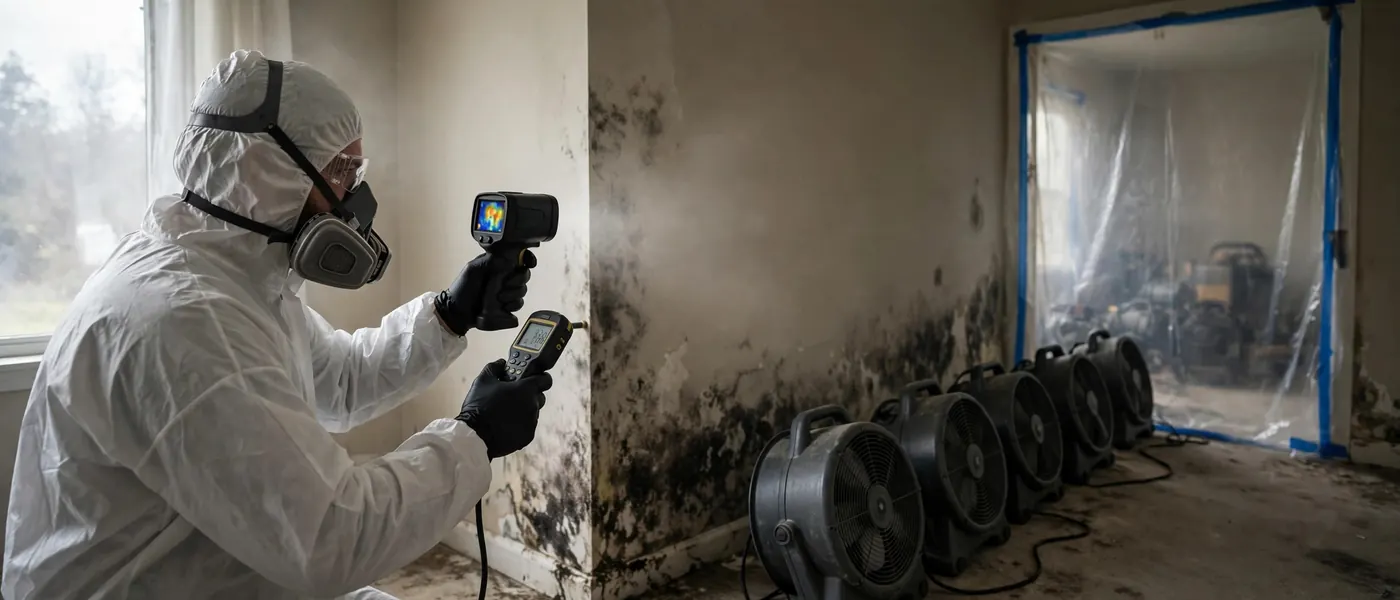
A dedicated mold inspection is different from a general home inspection. The general inspector notes visible problems and moisture signs; a mold inspector digs into the moisture story. A thorough inspection typically includes a visual examination of attics, crawl spaces, bathrooms, kitchens, laundry areas, and HVAC components; moisture-meter readings on walls, ceilings, and floors; and sometimes thermal imaging to find hidden wet areas behind walls.
Testing — air samples, surface samples, or both — is sometimes part of the inspection, but understand what it can and cannot tell you. Air sampling compares indoor spore counts to an outdoor control sample, which can indicate whether indoor mold levels are elevated. Surface sampling identifies the type of mold on a specific spot. Neither test tells you the full extent of hidden mold, and neither is a substitute for finding and fixing the moisture source. In fact, for an obvious visible mold problem, many professionals will tell you testing adds cost without changing the remediation plan — what matters is the scope of removal and the moisture fix.
What an inspection often misses is worth knowing too. Inspectors cannot see inside closed walls without opening them, and sellers rarely agree to destructive investigation before a sale. Mold behind shower tile, inside wall cavities, or under flooring may only be found once remediation or renovation opens those areas up. That is why a smart buyer budgets a contingency — 20 to 30 percent above the remediation estimate — for hidden mold discovered during the work.
Ask the inspector for a written report with a remediation scope, not just a lab result. The scope — what gets removed, what gets cleaned, what moisture repairs are needed, and what verification follows — is what contractors bid on, and it is what you will negotiate with the seller. A lab report alone, without a scope, is nearly useless in a negotiation.
What Remediation Costs — and Who Pays for It
Remediation costs depend on scope, and the range is wide. A small, contained job — a bathroom corner or a single closet — typically runs $500 to $1,500 in California. A single room, an attic section, or a crawl space section usually falls between $1,500 and $5,000. Multi-room contamination or a whole-house problem can reach $5,000 to $15,000 or more, and if the water source requires plumbing, roofing, or drainage work, that adds to the total. Reconstruction — new drywall, paint, flooring — is often a separate line item, so confirm whether any estimate you receive includes it.
Who pays is a negotiation, not a rule. In a buyer's market or a slow sale, sellers often agree to remediate before closing or to credit the buyer the full estimate. In a competitive California market, sellers may refuse, offer a partial credit, or expect the buyer to absorb the cost in exchange for the house. Your agent's job is to frame the request with the inspection report and a written contractor estimate — a specific dollar figure backed by a scope is far more persuasive than a vague demand to "fix the mold."
Be careful about how seller repairs are done. A seller who hires the cheapest crew, or who does the work themselves, may deliver a cosmetic cleanup that leaves hidden mold and the moisture source untouched. Whenever possible, negotiate for one of two structures: either a price credit so you control the remediation after closing, with a contractor you choose; or seller-paid remediation by a reputable company, with post-remediation verification testing completed before closing and the results shared with you. Never accept a seller's verbal promise that the mold "will be taken care of" without it in writing in the purchase agreement, with a deadline before closing.
Also check with your lender. Some loan programs require properties to meet certain condition standards, and significant mold or water damage can delay or complicate financing until it is remediated. Raise the issue with your lender early rather than discovering it days before closing.
Negotiation Moves: Credits, Repairs, and Price Reductions
You have three basic tools, and the right one depends on the size of the problem and the market:
A repair credit is usually the buyer's best option for mold. You receive a dollar amount at closing — ideally matching a written remediation estimate plus a contingency — and you hire your own contractor after you own the home. You control the quality, you choose the company, and you can verify the work. The downside is that you carry the project yourself, and if hidden mold pushes costs above the credit, the extra comes from your pocket.
Seller-completed repairs work when the problem is small and the seller is motivated. Insist on specifics in writing: the scope of work, the company performing it, and verification before closing. Build in a re-inspection right — the right to have your inspector verify the work before you remove contingencies. Without that, you are trusting the seller's word on a problem the seller has every incentive to minimize.
A price reduction achieves roughly the same economics as a credit but changes your loan math — a lower price can slightly reduce your down payment and monthly payment, while a credit gives you cash at closing for the work. Your agent and lender can tell you which structure serves you better; for most buyers dealing with mold, a credit is simpler and more transparent.
Whatever you choose, keep the mold finding and the agreed remedy in the written purchase agreement. Verbal agreements in real estate are worth very little, and a seller's agent's reassurances are worth even less. If the seller agrees to remediate, the agreement should name the deadline, the verification standard, and what happens if verification fails — typically, an extension of the contingency period or the right to cancel.
One more negotiation reality: do not let a mold finding become the only thing you negotiate. If the inspection also found roof, electrical, or plumbing issues, package them together. A seller facing a single $3,000 mold credit may push back; a seller facing a combined $12,000 repair list may see the mold credit as the easy concession.
When to Walk Away From a Moldy House
Most mold problems are fixable, but some houses are not worth the risk. Walk away — or at least pause hard — when:
- The moisture source is structural or unfixable within reason. A high water table flooding a basement, a foundation that channels water inward, or a hillside drainage failure can cost tens of thousands and may never be fully solved.
- Mold is widespread and the seller will not negotiate. Multi-room or whole-house contamination plus a seller who refuses credits or repairs is a sign of what the rest of the transaction will feel like.
- The seller hid a known problem. If you discover the seller concealed prior mold or water damage, trust is broken on everything else in the disclosure packet. What else was hidden?
- The house has a history of repeated mold. One incident with a clear cause is normal. Three remediations in five years means the moisture problem was never actually fixed, and you would be buying the fourth.
- The numbers do not work. If remediation plus the moisture fix plus your contingency exceeds what the house is worth to you — or pushes your budget past comfort — no house is worth stretching for. There will be another house.
- Health concerns cannot be resolved before move-in. If a household member has serious respiratory conditions and the remediation cannot be completed and verified before closing, waiting for the right house is safer than moving into a remediation zone.
Walking away during the contingency period is not failure; it is the contingency period doing exactly what it exists to do. Losing a few hundred dollars on inspections is far cheaper than inheriting a $15,000 remediation and a moisture problem that follows you for years.
After You Buy: Protecting Your New Home From Mold Returning
If you bought the house — mold remediated, moisture source fixed — the job is not quite done. Mold returns when moisture returns, and the best protection is a maintenance routine built around the lessons of the inspection:
- Keep indoor humidity between 30 and 50 percent. A few inexpensive hygrometers in bathrooms, the kitchen, and the laundry room will tell you when you are drifting into mold territory.
- Fix the small things fast. A dripping supply line, a toilet that rocks, a shower that leaks at the curb — these are the leaks that become the next mold colony. California's older homes are full of slow leaks that owners ignore for months.
- Ventilate wet rooms properly. Bathroom fans must exhaust outdoors, not into the attic. Range hoods should vent outside. Dryers must vent fully to the exterior.
- Walk the property seasonally. After the first winter rains, check the attic, crawl space, and perimeter drainage. Catching a new leak in its first month is the difference between a $200 plumbing repair and a $4,000 remediation.
- Keep your remediation paperwork. The scope, invoices, and verification results are valuable when you eventually sell — they turn a scary disclosure into a documented, resolved issue that reassures the next buyer.
A house that had mold is not a damaged house. A house that had mold, was properly remediated, had its moisture source fixed, and is maintained with that history in mind is often a better-maintained house than one whose problems are still hidden.
Frequently Asked Questions
Should I buy a house with mold in California?
It depends on the cause and the scope. A small, contained mold problem with an identified and fixable moisture source is usually fine — especially if the seller credits the repair or completes verified remediation before closing. Widespread mold, an unfixable moisture source, or a seller who hid the problem are reasons to reconsider.
Does a seller in California have to disclose mold?
Yes. Under California's Transfer Disclosure Statement, sellers must disclose known mold problems, past water damage, and past mold remediation. But sellers only disclose what they know, and the disclosure may be vague — your own inspection during the contingency period is your real protection.
How much does mold remediation cost before buying a house?
Small jobs run $500 to $1,500 in California, single rooms or attic sections $1,500 to $5,000, and multi-room or whole-house problems $5,000 to $15,000 or more, plus any plumbing, roofing, or drainage repairs needed to fix the moisture source. Get a written contractor estimate based on an inspection scope before negotiating.
Can I get a mortgage on a house with mold?
Usually yes, but it depends on the lender and the severity. Significant mold or water damage can delay financing until remediation is complete, particularly under stricter loan programs. Tell your lender about the finding early so it does not surface as a surprise days before closing.
Is mold in a house a health risk for my family?
Mold exposure can trigger allergies and respiratory symptoms, particularly for people with asthma or weakened immune systems, and long-term exposure in a damp home is a genuine health concern. That is why verified remediation — removal plus a fixed moisture source, not just a surface cleaning — matters more than the visible mold alone.
Get Mold Remediation in Your City
Need Mold Removed Fast?
Our California crews are ready 24/7. Call now for a free assessment and an upfront flat-rate quote in writing.
Upfront flat-rate pricing • Written guarantee • 24/7 emergency service