Mold After a Fire in California: Cleanup & Prevention Guide
Expert guidance from our California remediation team — plus local crews in 50+ cities when you're ready for help.
When the flames are out, most California homeowners assume the worst is over. It often is not. Mold after a fire in California is a real and fast-moving second disaster: the thousands of gallons of water used to extinguish the blaze soak into drywall, insulation, flooring, and framing, and mold can begin growing on those wet materials within 24 to 48 hours. Add broken windows, a damaged roof, and days or weeks before repairs start, and a fire-damaged home becomes an ideal mold incubator.
This guide explains the order of cleanup after a fire, what firefighting water does inside your walls, when soot and mold together make a job unsafe to handle alone, what can be saved, and how to rebuild so mold does not return.
In this guide:
- Mold After a Fire in California: Why It Grows So Fast
- The Cleanup Order: Safety, Soot, Water, Then Mold
- What Firefighting Water Does Inside Walls and Floors
- Smoke, Soot, and Mold: A Combination You Should Not Handle Alone
- What Can Be Saved and What Must Go
- Insurance, Documentation, and the Claims Process in California
- Preventing Mold During the Rebuild
- Frequently Asked Questions
- Get Help With Mold After a Fire in California
Mold After a Fire in California: Why It Grows So Fast
Mold needs only three things: moisture, a food source, and time. A fire-damaged home supplies all three in abundance. Drywall, wood framing, paper-backed insulation, carpet, and cardboard are all mold food. Firefighting water supplies the moisture — often far more water than a plumbing leak ever would, driven deep into wall cavities and under floors by hose pressure. And time is usually on mold's side: after a fire, homeowners are displaced, insurance adjusters take days to visit, and contractors may not start work for weeks while the claim is processed.
California's climate adds its own push. In coastal areas, marine-layer humidity keeps a damaged, unsealed home damp around the clock. In inland valleys, summer heat accelerates mold growth on wet materials. In wildfire zones, ash and charred debris hold moisture against surfaces long after the fire is out. Even a home that only suffered smoke damage from a nearby wildfire can develop mold, because firefighters may have sprayed the roof and exterior, windows may have been left open, and the home may have sat unpowered — meaning no air conditioning or dehumidification — for days.
The practical takeaway is simple: mold prevention after a fire is a race against the clock, and the clock starts the moment the water hits. Every day a fire-damaged home sits wet and unventilated, the mold problem grows larger, more expensive, and harder to fully remove. The first 48 hours matter most, but action at any point still beats waiting for the rebuild to deal with it.
The Cleanup Order: Safety, Soot, Water, Then Mold
After a fire, the temptation is to start cleaning immediately. Resist it until the home is declared safe to enter. Fire weakens floors, roofs, and stairways; electrical systems may be damaged; and ash and soot contain irritants that are harmful to breathe without protection. Wait for the fire department's clearance, and if the structure looks compromised, have a structural professional assess it before anyone goes inside for more than a brief look.
Once entry is safe, the cleanup order matters more than most people realize:
- Document everything first. Photograph and video every room, every damaged item, and every wet surface before anything is moved or discarded. Open drawers and cabinets on camera. This record is the foundation of your insurance claim, and once debris is hauled away, it cannot be recreated.
- Secure the building. Board up broken windows and doors, tarp damaged roof sections, and shut off water and gas lines that were affected. Every rainstorm that enters a fire-damaged home restarts the mold clock.
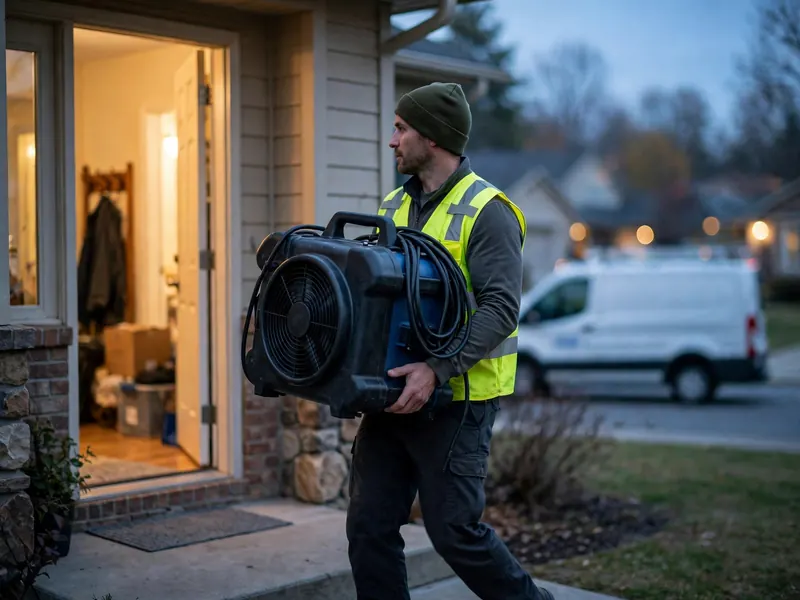
- Remove standing water and start drying. Pump out standing water, then run commercial air movers and dehumidifiers — not just household fans. The goal is to get structural materials below about 16 percent moisture content as fast as possible. This drying phase should start within days, not weeks.
- Address soot and smoke residue. Soot is acidic and continues to corrode surfaces and etch glass and metal the longer it sits. Dry soot should be vacuumed with a HEPA vacuum before any wet cleaning, because wetting soot smears it and drives it deeper into porous materials.
- Then deal with mold. Once the home is dry and soot is addressed, a mold assessment can identify what grew during the wet period. Mold remediation after a fire usually follows the same containment, removal, cleaning, and clearance-verification steps as any other remediation job — but the affected area is often larger, because the water spread so widely.
- Verify dry before closing walls. Framing moisture readings should be documented before drywall goes up. If a contractor wants to close walls on a schedule rather than on readings, push back.
- Use mold-resistant drywall in wet-prone areas. Bathrooms, kitchens, laundry rooms, and any wall that sits against grade benefit from paperless or fiberglass-faced drywall. It is not mold-proof, but it removes the paper food source mold loves most.
- Fix the water paths the fire exposed. Fires often reveal pre-existing problems — a roof valley that always leaked, gutters that dumped water at the foundation, a bathroom fan vented into the attic. The rebuild is the cheapest time to fix them, while walls are open.
- Improve ventilation and drainage while you are at it. Proper bath and kitchen exhaust vented outdoors, a sealed and insulated attic, and gutters that discharge away from the foundation all reduce the moisture that feeds future mold.
- Consider the defensible-space angle. In wildfire-prone California areas, rebuilding with fire-resistant materials and maintaining defensible space protects against the next fire — and therefore against the next round of firefighting water and mold.
- Keep drying equipment running until readings confirm dryness. Contractors sometimes pull dehumidifiers early to meet a schedule. Moisture readings, not the calendar, should decide when drying is done.
- Do a post-remediation verification. After mold removal and before rebuild finishes, clearance testing or at least a documented visual and moisture inspection confirms the mold is actually gone, rather than covered up.
Skipping ahead in this order causes real problems. Cleaning mold before the home is dry just invites it back. Painting over soot stains traps both odor and moisture. And throwing away damaged items before documenting them can cost you thousands on your claim.
What Firefighting Water Does Inside Walls and Floors
A burst pipe wets one area. Firefighting water wets everything: ceilings collapse under hose streams, water runs down inside wall cavities from the attic to the slab, and it pools under flooring and inside built-in cabinetry. Much of this water is invisible from the room, which is why fire-damaged homes so often develop hidden mold months later, long after the visible damage was repaired.
Drywall is the first casualty. Standard drywall wicks water upward and loses structural integrity when saturated; it also feeds mold readily because of its paper facing. Insulation behind it — especially fiberglass batts — holds water like a sponge and dries very slowly inside a closed wall, creating a hidden mold reservoir. Wood framing can survive wetting if it is dried promptly, but framing that stays wet for weeks may develop surface mold and, in the worst cases, begin to decay.
Flooring hides water too. Water runs under hardwood and laminate, where it cups boards and feeds mold on the subfloor. Carpet and pad act as a reservoir, and pad that stayed wet for more than about 48 hours almost always needs to go. Tile floors look unaffected, but water migrates through grout and thinset into the subfloor and wall plates below.
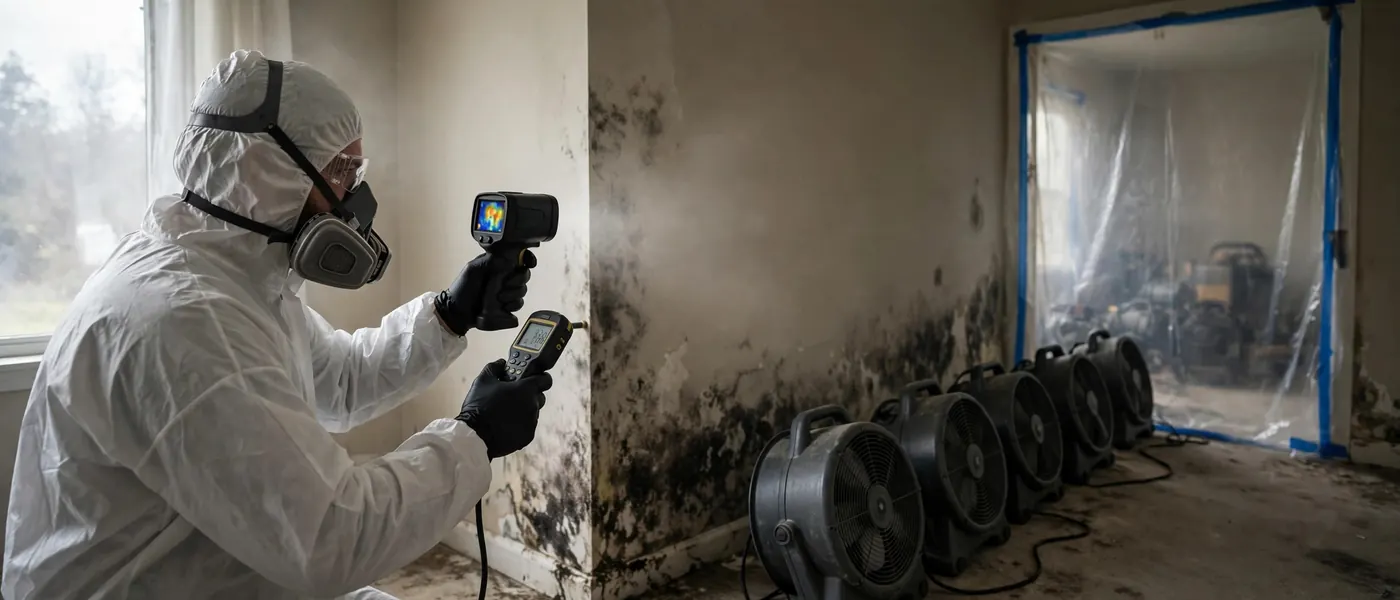
This is why professional moisture mapping matters after a fire. Moisture meters and thermal imaging can find wet wall cavities and subfloors that look dry on the surface, so the drying plan targets the real problem instead of the visible one. Any rebuild that closes up walls before the framing inside them is verified dry is building a mold problem into the new walls.
Smoke, Soot, and Mold: A Combination You Should Not Handle Alone
Either mold or soot alone is a serious cleanup job. Together, they are worse than the sum of their parts, and they change how a job must be approached. Soot particles are tiny — often under 10 microns — and they penetrate deep into porous materials, fabrics, and HVAC systems. Mold spores ride on the same air currents and settle into soot-coated surfaces, where the carbon-rich residue gives them an additional food source.
For the homeowner, the health risk of doing this cleanup without protection is significant. Disturbing mold colonies without containment spreads spores through the home, and breathing soot and ash irritates the lungs and eyes. Anyone with asthma, allergies, or other respiratory conditions should stay out of the cleanup entirely. Proper protection means at minimum a fit-tested respirator (not a paper dust mask), eye protection, gloves, and protective clothing — and for large areas, full containment with negative air pressure so spores and soot do not migrate into clean parts of the home.
There is also a technical reason to bring in professionals: the cleaning methods for soot and mold conflict if done in the wrong order. Wet-cleaning soot before it is dry-vacuumed smears it permanently. Using a household cleaner on mold without containment spreads it. And running the home's HVAC system before the ductwork is cleaned circulates both soot and spores into every room. A professional crew sequences the work — dry soot removal, structural drying, mold containment and removal, then HVAC cleaning — so each step does not undo the last.
A good rule of thumb: if the fire damage covers more than a single room, if the HVAC system was running during or after the fire, or if anyone in the household has respiratory problems, do not attempt the combined cleanup yourself. Get an assessment first; the assessment itself is what tells you whether the job is small enough to manage safely.
What Can Be Saved and What Must Go
After a fire, deciding what to keep is emotional and financial at once. These general rules help, but when in doubt, photograph the item, set it aside, and ask your remediation crew or adjuster before discarding anything of value.
Usually salvageable: Solid wood furniture can often be cleaned and refinished if it was not charred and dried promptly. Metal items, glass, and ceramics generally clean well. Hardwood floors may survive if drying started quickly, though cupped boards sometimes flatten as they dry. Clothing and linens can often be professionally laundered, though smoke odor can be stubborn and may take multiple treatments.
Usually a loss: Carpet and carpet pad that stayed wet more than 48 hours. Mattresses and upholstered furniture that absorbed firefighting water — they cannot be dried thoroughly enough to guarantee no mold growth inside. Paper-backed drywall and wet fiberglass insulation. Particle board and MDF cabinetry, which swell and disintegrate when wet. Food, medicines, and cosmetics exposed to heat, smoke, or water should always be discarded, no exceptions.
It depends: Books and documents can sometimes be freeze-dried by document-recovery specialists, but the cost only makes sense for irreplaceable items. Electronics exposed to soot need professional cleaning before being powered on — soot is conductive and can short circuits. Appliances that were wet need inspection before reuse.
One expensive mistake is keeping wet porous items "to see if they dry out." A mattress or sofa that feels dry on the surface can still be damp and moldy inside, and it will seed mold into a freshly remediated room. If an item stayed wet for days and cannot be opened up and verified dry, letting it go is usually the cheaper choice in the long run.
Insurance, Documentation, and the Claims Process in California
Fire is a covered peril under standard California homeowners policies, which is good news — but the mold that follows a fire is where claims get complicated. Some policies cover mold remediation when it results directly from the covered fire and the firefighting water, while others cap mold coverage with a sublimit or exclude it when it is tied to delayed mitigation. The single most important thing you can do is start mitigation promptly and document that you did: insurers can reduce a claim when damage worsened because the homeowner waited.
Keep a claim file from day one: the fire department report, your photo and video documentation, every contractor estimate, receipts for emergency boarding, tarping, and drying, and a written log of every conversation with your insurer, including dates and names. Do not sign a release or accept a final settlement before the full extent of the water and mold damage is known — hidden moisture behind walls often surfaces weeks after the fire, and a settlement signed too early may not cover it.
If your adjuster's estimate seems low, you can get independent contractor estimates and present them, and California homeowners have the right to request a reinspection. For large or disputed claims, a public adjuster or an attorney who handles property claims can be worth consulting, particularly if the insurer is disputing the mold portion of the claim. And if you are in a wildfire-declared disaster area, check for additional assistance programs — state and federal disaster aid sometimes covers gaps that insurance does not, including temporary housing costs while remediation and rebuilding proceed.
Preventing Mold During the Rebuild
The rebuild is your best chance to make the home more mold-resistant than it was before the fire — and also your biggest risk of sealing a mold problem inside new walls. These steps protect the investment:
A rebuild that follows these steps does more than restore the home — it breaks the cycle where one disaster quietly causes the next.
Frequently Asked Questions
How fast does mold grow after a fire in California?
Mold can begin growing on wet materials within 24 to 48 hours of the firefighting water soaking in, and California's warm climate can speed that up. Visible growth often appears within a week on drywall, carpet, and other porous materials that stayed wet. The sooner drying starts, the smaller the mold problem will be.
Does homeowners insurance cover mold after a fire?
Often, yes, when the mold resulted directly from the fire and the water used to fight it — but many policies cap mold coverage with a sublimit, and insurers may dispute mold that grew because mitigation was delayed. Document your damage, start drying promptly, and read the mold and fungi language in your policy before accepting a settlement.
Can I clean soot and mold myself after a small fire?
For a very small, contained area — a stovetop fire with light soot and no structural water damage — careful DIY cleaning with proper respiratory protection may be reasonable. For anything larger than a single room, any HVAC contamination, or any household member with breathing problems, get a professional assessment first. The wrong cleaning order can spread both soot and mold further.
Why does my house still smell like smoke after cleaning?
Smoke odor lives in porous materials: drywall, wood, fabrics, and insulation absorb it deeply. Surface cleaning alone rarely removes it. Odor removal usually requires a combination of thorough cleaning, thermal fogging or ozone treatment by professionals, sealing of affected surfaces, and in stubborn cases, removal of the most saturated porous materials.
Should I run my air conditioner after a fire to dry the house?
Not until the HVAC system has been inspected and cleaned. Running a contaminated system circulates soot and mold spores into every room and can contaminate ductwork that was previously clean. Use portable commercial dehumidifiers and air movers for drying, and have the HVAC system professionally cleaned before it runs again.
Get Mold Remediation in Your City
Need Mold Removed Fast?
Our California crews are ready 24/7. Call now for a free assessment and an upfront flat-rate quote in writing.
Upfront flat-rate pricing • Written guarantee • 24/7 emergency service